Inside Kylemore Abbey: Every Room on the Ground Floor, the Church and the Garden
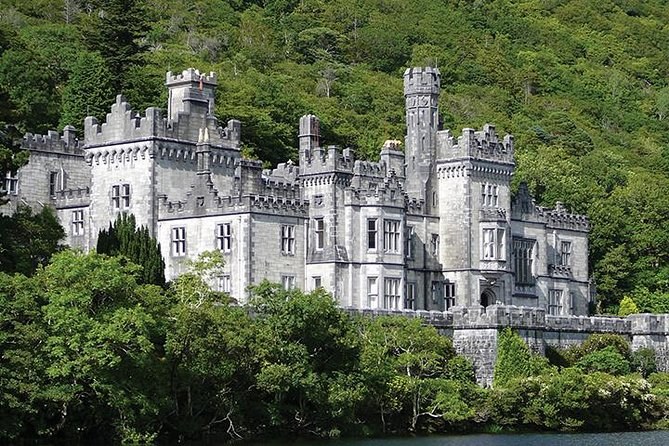
The short answer. You see the restored ground floor of the abbey: nine open rooms, walked in order, telling the story from the Henrys to the nuns. The upper floors are closed, because the Benedictine community still lives there. Beyond the house, the same ticket opens the Neo-Gothic Church, the Mausoleum, the walks and the six-acre walled garden.
Most people arrive at Kylemore knowing one view: the grey front of the house reflected in the lough. Inside is a different story, and a sadder one. The ground floor is laid out as a walk through time, called "From Generation to Generation", which opened in 2019. Here is each part of the estate in the order most visitors walk it, with what to look for and roughly how long to give it. The times are our advice for a two-hour Kylemore Abbey tour stop, not official figures.
Why you only see the ground floor
Kylemore is still a working abbey. Benedictine nuns have lived here since December 1920, and the rooms above are their home. So the visit is self-guided and stays downstairs, and that is the one thing to know before you go. Know it in advance and the ground floor is plenty. One traveller's summary was that you only tour the downstairs, and the gardens make up for it.
The abbey, room by room
The Welcome Room
This was the kitchen scullery. Now a short film tells the whole Kylemore story, beside the table where Sr Benedict made butter. Give it five minutes: it frames everything after it.
The Flight From Ypres
How did Irish nuns end up here? Their abbey in Ypres, in Belgium, was destroyed early in the First World War. This room tells their journey to Connemara, with a stained glass window and objects of the Benedictine order.
Kylemore Today
A century of the community in the house, and the girls who studied at Kylemore Abbey School from 1923 until the last exams in June 2010.
Mitchell Henry's Library and Study
The room where the man who built the house worked. Speaking portraits introduce you to Mitchell and Margaret, so this is where the love story begins.
The Inner Hall and Saloon Hall
Stop at the foot of the grand staircase and look up at the leaded windows. The displays here cover the fishing and shooting that first drew the Henrys to Connemara.
The Drawing Room
If you only linger in one room, make it this one. It holds the only portrait of Margaret Henry, beside an Italian marble fireplace, hand-stencilled wallpaper and a copy of one of her 1860s ball dresses. Allow ten minutes.
The Morning Room
Where the women of the house read, sewed and received guests, and where the story turns to the Henrys' nine children.
The Dining Room
Laid for dinner, as if the family were due back. The walls were once hung with black and gold silk.
The Ante Room and Gallery Saloon Hall
The last rooms belong to the Duke and Duchess of Manchester, who bought the house in the early 1900s, and the guests who came to stay. The guides' desk is in the Gallery Saloon, and this is where you sign up for a free history talk.
The Neo-Gothic Church
A five-minute walk along the lough brings you to the church Mitchell Henry built in Margaret's memory, begun after her death and finished in 1881. Inside, look at the columns. Each marble comes from one of Ireland's four provinces: green from Connemara, black from Kilkenny, red from Cork and white from Tyrone. Outside, carved flowers, birds and angels stand where you would expect gargoyles. The church was re-dedicated as a Catholic church in 1920, and its restoration was finished in 1995. It is open during repair works, as of August 2026, and it is the one building a wheelchair cannot enter. Give it fifteen minutes.
The Mausoleum
Just past the church, on the left of the avenue, is a small red-brick building that is easy to walk past. Margaret lies here, and Mitchell Henry, who died in London in 1910, was placed beside her. No member of the family lies in the church vaults. It takes two minutes, and it is the quiet end of the love story you followed in the house.
The Victorian Walled Garden
The garden is about six acres, split in two by a mountain stream, and you reach it by the free shuttle bus. The eastern half has the formal flower garden, the glasshouses, the head gardener's house and the bothy where the gardeners lived. The western half has the vegetable garden, fruit trees, a rockery, a herb garden and one of Ireland's longest herbaceous borders. Only varieties grown before 1901 are planted. Twelve panels explain it as you go, and Kylemore's Victorian Walled Garden has its full story. Allow 45 minutes, plus the bus.
Things most visitors walk past
- The Mausoleum, which is small, plain and set back from the avenue.
- The church's carvings, where the gargoyles would be. Look up before you go in.
- The Giant's Ironing Stone, a stone shaped like an old iron, used as a wishing stone.
- The head gardener's house in the walled garden, restored and open to walk through.
- The Horsechestnut Loop, a five-minute tunnel of trees past the pony paddock.
A two-hour route that works
Here is an order that fits a coach stop, based on what travellers who did it recommend:
| Stop | How you get there | Our suggested time |
|---|---|---|
| Victorian Walled Garden | The free shuttle bus | 45 minutes, plus the ride |
| The abbey, ground floor | Shuttle back, then along the lough | 40 minutes |
| Neo-Gothic Church and Mausoleum | Five minutes' walk along the shore | 20 minutes |
| Café or shop | Back by the car park, outside the paid area | Whatever is left |
Photographs
The picture everyone wants is the house across Pollacappul Lough. You can take it from the bridge over the lough or from near the car park, before you even buy a ticket. It works best on a still day, when the water holds the reflection. For the church, stand back on the avenue so the tower fits in the frame. Want someone to explain it all as you go? A driver-guide will set the scene on the road, and the abbey's own history talks fill in the rest.
Days that give you two hours inside
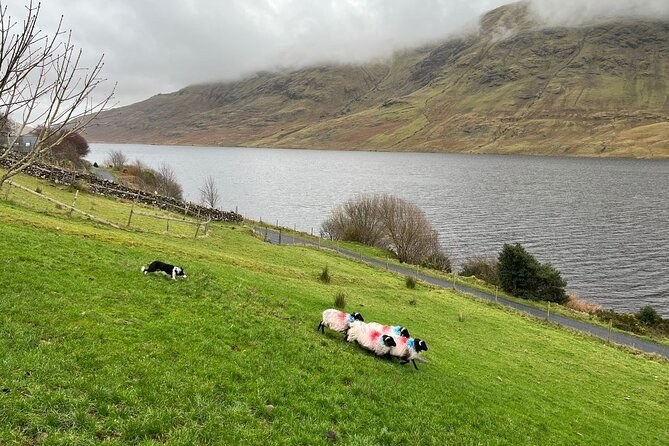
Small Group Kylemore Abbey, Sheepdog Demo & Connemara Tour
A Lally Tours day capped at 25, with the abbey ticket and a sheepdog demonstration both in the fare.
From $134 per person
Check Availability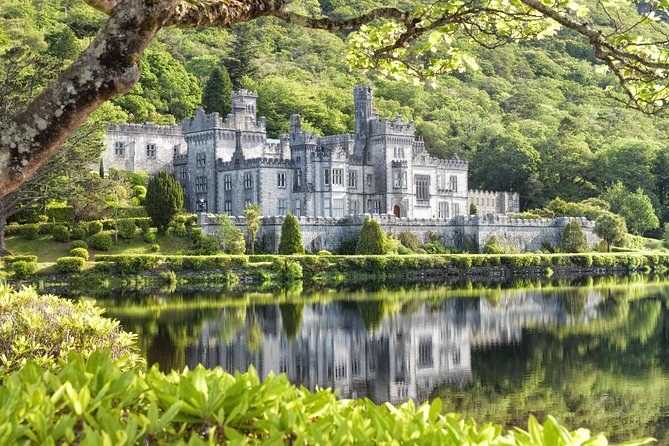
Connemara Day Trip Including Leenane Village and Kylemore Abbey from Galway
Leenane and Killary on the way out, two hours at Kylemore with the estate ticket paid, and back to Galway by Spiddal.
From $76 per person
Check AvailabilityNext: pick a day that gives you the full two hours, with the ticket paid. Every fare sits side by side on Kylemore Abbey Tours.