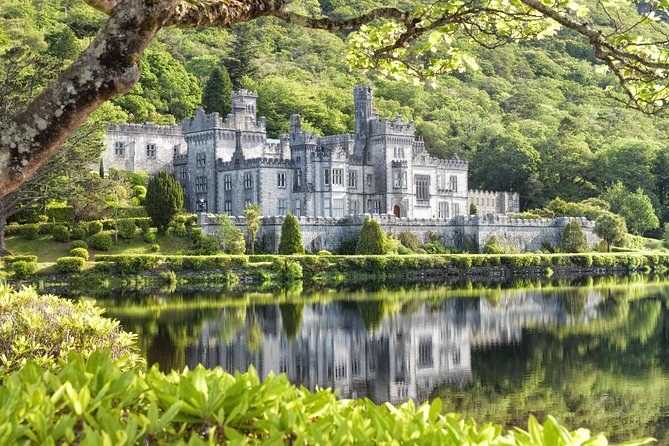
Connemara Day Trip Including Leenane Village and Kylemore Abbey from Galway
Leenane and Killary on the way out, two hours at Kylemore with the estate ticket paid, and back to Galway by Spiddal.
From $76 per person
Check AvailabilityA castle built as a love token, a Duke who could not afford it, and a community of nuns who fled Ypres. Before you book a Kylemore Abbey tour, here is the story that the rooms tell.
Mitchell Henry was born in Manchester to a family of Irish descent. He trained as a surgeon, and later sat for Galway as a Liberal MP for fourteen years. He was one of the founders of the Home Rule movement.
He and Margaret Vaughan Henry spent their honeymoon in Connemara in the 1850s. They came back to buy Kylemore Lodge, a fishing lodge on the shore of the lough, and the land around it.
The valley already had a name that told its story. Kylemore comes from the Irish Coill Mhór, the big wood. A sporting magazine in 1842 described the mountain above the lake as “still covered with the remains of an ancient forest”. The Henrys set out to bring it back, and planted some 300,000 trees, native and exotic.
Margaret laid the foundation stone on 4 September 1867. The house was designed by James Franklin Fuller, and built of granite into the side of Duchruach mountain. The builders used dynamite to cut its platform out of the slope.
It was the family home of the Henrys and their nine children. The ground-floor rooms you walk through today were theirs: the library and study, the drawing room, the morning room and the dining room. The Henrys also laid out the Victorian Walled Garden, with 21 heated glasshouses.
In 1874 the family went on holiday to Egypt. On the Nile, Margaret fell ill with dysentery and died sixteen days later. She was 45. Mitchell had her body embalmed in Cairo and brought home to Kylemore.
Local lore says her body lay in a glass coffin in the staircase hall for a time. Mitchell then built the Neo-Gothic Church in her memory, from 1877 to 1881, again to Fuller's design. Its columns are marble from the four provinces: green from Connemara, black from Kilkenny, red from Cork and white from Tyrone. Where a Gothic church would have gargoyles, this one has flowers, birds and angels.
Margaret was laid to rest in the small brick Mausoleum on the avenue. When Mitchell died in London in 1910, he was interred beside her. You can visit both on the walk along the lough.
The abbey's guides give free history talks every day. Every tour card shows how long you get at the estate, and whether the ticket is in your fare.
In the early 1900s the Henrys sold Kylemore to the 9th Duke of Manchester, William Angus Drogo Montagu, and his American wife, Helena Zimmerman. The Duke's own history page gives 1903 for the sale.
The couple left in 1914. The rooms you see today keep their story in the Ante Room and the Gallery Saloon Hall.
The Duke gambled Kylemore away at cards. You will hear it told in Connemara, and it is the version most people remember.
Money ran short after Helena's father, Eugene Zimmerman, died. The abbey's own history treats that as the likelier cause.
The nuns who bought Kylemore had been on the move for three centuries. Their community was founded in Brussels in 1598. Their abbey at Ypres, in Flanders, dates from 1665, and in 1682 it was made over to the Irish nation.
In 1688 the nuns moved to Dublin at the request of King James II, then went back to Ypres after the Battle of the Boyne. Early in the First World War their abbey was destroyed. They reached Kylemore in December 1920 and turned the castle into an abbey. It is the oldest of the Irish Benedictine abbeys.
The same year, they re-dedicated the Henrys' church as a Catholic church. They brought the estate back into use as a farm and a kitchen garden, and a community still lives in the upper floors today. That is why the visit is to the ground floor only.
The nuns opened a girls' boarding and day school in 1923, with 30 pupils. For almost ninety years it drew girls from Ireland and abroad. The Kylemore Today room tells their story.
A guesthouse run by the community closed after a fire in 1959. The school itself lasted until June 2010, when the last pupils sat their exams. Today the University of Notre Dame, in Indiana, has a Global Gateway on the estate.
The estate is run by the Kylemore Trust, a registered charity led by the Benedictine nuns. In 2019 the abbey opened the ‘From Generation to Generation’ Visitor Experience on the ground floor.
You enter under a granite arch and follow the story in order. The Welcome Room was the kitchen scullery. The Flight From Ypres room follows the nuns' journey, and Mitchell Henry's Library and Study brings back the founder. The Drawing Room holds the only portrait of Margaret. The daily history talks in the front hall are the spoken version of all this.
| Year | What happened |
|---|---|
| 1598 | The Benedictine community that now lives at Kylemore is founded in Brussels |
| 1665 | Its abbey at Ypres, in Flanders, is founded; in 1682 it is made over to the Irish nation |
| 1850s | Mitchell and Margaret Henry honeymoon in Connemara |
| 4 Sep 1867 | Margaret lays the foundation stone of Kylemore Castle |
| 1874 | Margaret dies after falling ill in Egypt, aged 45 |
| 1877–1881 | The Neo-Gothic Church is built in her memory |
| 1903 | The 9th Duke of Manchester and his wife Helena take the estate |
| 1910 | Mitchell Henry dies in London and is laid beside Margaret in the Mausoleum |
| 1914 | The Duke and Duchess leave; the Ypres abbey is destroyed in the war |
| Dec 1920 | The Benedictine nuns arrive; the church is re-dedicated as Catholic |
| 1923 | Kylemore Abbey School opens with 30 pupils |
| 1959 | A fire closes the guesthouse |
| 1995 | The church restoration is completed and opened by President Mary Robinson |
| 13 Oct 2000 | The restored Victorian Walled Garden reopens |
| June 2010 | The last pupils sit their exams, and the school closes |
| 2019 | The ‘From Generation to Generation’ Visitor Experience opens |
Every date here comes from the abbey's own history pages, read in 2026. Where two of its pages disagree, we give the date both agree on.
Leenane and Killary on the way out, two hours at Kylemore with the estate ticket paid, and back to Galway by Spiddal.
From $76 per person
Check Availability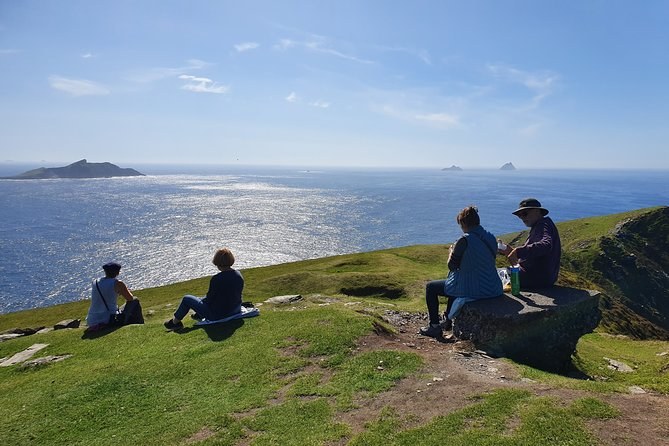
Ten days from Dublin in a group of 16 at most, with three hours at Kylemore and entry to it and the Cliffs of Moher in the fare.
From $3,393 per person
Check Availability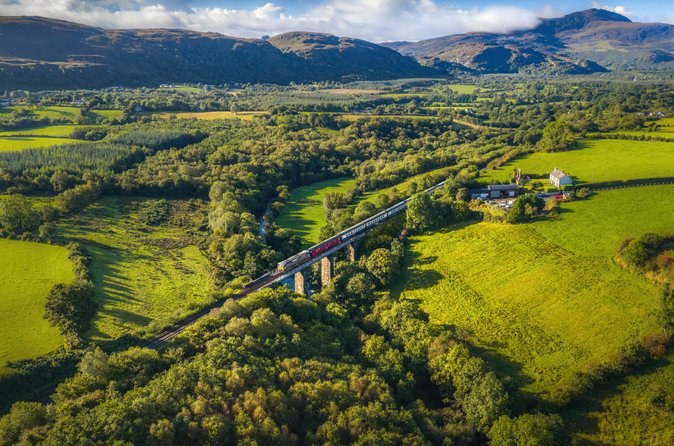
Eight days by private train from Connolly Station in Dublin, June or September, with two hours at the abbey and garden and every admission in the fare.
From $6,344 per person
Check AvailabilityNext: see what each room holds on things to see at Kylemore Abbey, walk the restored walled garden, or compare every day out on Kylemore Abbey Tours.