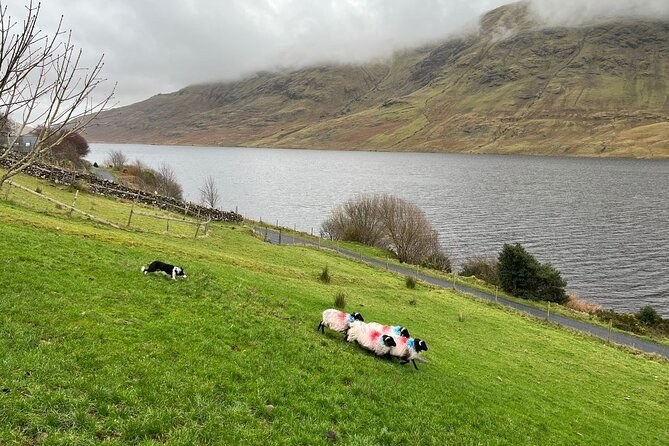
Small Group Kylemore Abbey, Sheepdog Demo & Connemara Tour
A Lally Tours day capped at 25, with the abbey ticket and a sheepdog demonstration both in the fare.
From $134 per person
Check AvailabilitySix acres of flowers and vegetables that grew here before 1901, rescued from brambles by a nun with a plan. Planning a Kylemore Abbey tour? The garden is in your ticket, and so is the bus that takes you there.
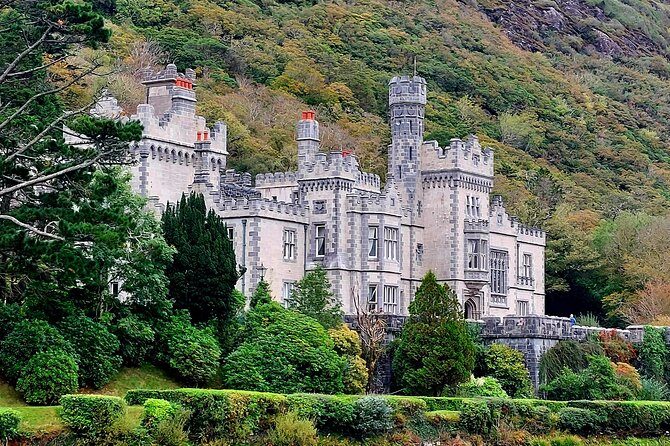
The garden covers about six acres, and a mountain stream runs through the middle. The two halves do different jobs, so decide which you want before your time runs short.
| Eastern half | Western half | |
|---|---|---|
| Planting | The formal flower garden, in Victorian bedding patterns | The vegetable garden, fruit trees, herbaceous border, rockery and herb garden |
| Buildings | The glasshouses, the Head Gardener's House and the bothy | The West Gate, leading to a young oak plantation |
| Look for | Ribbon beds, and espalier apples and pears on the walls | Cardoon, salsify and scorzonera, and the fernery on the vegetable garden's edge |
Twelve self-guiding panels take you round, starting at the top of the formal flower garden. The herbaceous border is one of the longest in Ireland.
You enter the formal garden first. Its geometric beds and strong colours follow photographs taken by Alexander Henry in the 1870s. The plants may look like the ones in your own garden, but every one is a Victorian variety.
The walls do real work. They are Scottish red brick and Irish granite, and the brick soaks up the day's sun and gives it back in the evening. Apples and pears grow flat against them, and the walls keep out wind, frost and the sheep.
The narrow beds planted in three colours down the sides are ribbon beds, a Victorian fashion. The bedding changes twice a year, once for spring and once for summer, so the colours you see depend on your month.
The western half grows vegetables you may never have seen: cardoon, salsify and scorzonera, beside old varieties of potato and cabbage. A herb garden holds culinary and medicinal plants.
For most of a century this garden fed the nuns and the school. Today it is mainly a show garden. Some produce still goes to the estate's kitchens, or is sold for charity. The gardeners use seaweed, farmyard and green manure, and they deter pests with coffee grounds and companion planting.
Mitchell Henry built the garden with the castle, in the late 1800s. It had 21 heated glasshouses and a staff of 40 gardeners. It was one of the last walled gardens built in Victorian Ireland, and it was compared with Kew.
A gardener's job here changed lives. The hours ran from first light to last, but the pay and conditions were better than on other estates, at a time of hard poverty across Ireland. The Vinery grew bananas and grapes under glass in the 1890s.
After the Henrys left, the garden slowly ran down. The nuns brought it back as a working garden in 1920, but by the 1990s most of it lay under shrubs, brambles and trees.
Sr Magdalena FitzGibbon led the work, with help from the Great Gardens of Ireland fund. The early digging was closer to archaeology than gardening, as the team uncovered paths and beds. At the reopening, Sr Benedict put the key in the gate, and the formal speeches took place in the new Garden Tea House.
The Head Gardener's House stands above the garden, where its first tenant could watch both the beds and his workers. It was the one building that stayed whole. The German travel writer A. E. Johann lived there in the 1950s while he wrote a guide to Ireland.
A little way down the path is the Workman's Bothy, where several gardeners lived. You can go into the bothy and the toolshed, where curiosity boxes and old photographs show how the gardeners lived.
The garden sits apart from the abbey, and a free shuttle bus runs between them. It is in your ticket, and it is wheelchair accessible. Most garden paths are accessible too, though some areas have steep slopes or steps.
Dogs are welcome on a lead outdoors, but they cannot ride the shuttle bus. The Garden Tea House, open 11:00 to 16:00, serves food inside the garden, and the Wild Play area for small children is beside it.
On a two-hour stop, take the shuttle first. You then see the abbey and the church on your way back to the car park, and finish near the café when your time is up.
That is enough for the garden and the abbey if you ride the bus first. The tour cards show the time you get at the estate, and whether the ticket is in the fare.
The first of the year's two bedding schemes goes in, and the formal garden takes on its spring colours.
The summer bedding and the herbaceous border are at full height. Your ticket includes the guided garden tours in these three months.
The abbey's head gardener writes an autumn garden blog each year. Read it before you go to see what is in flower.
The garden closes at 16:30, so go there first. It is closed on 24, 25 and 26 December.
Rain, wind and daylight by month are on Kylemore Abbey weather.
The garden's history, layout and planting come from the abbey's own garden page, read in 2026. Hours and access come from its ticket and accessibility pages.
A Lally Tours day capped at 25, with the abbey ticket and a sheepdog demonstration both in the fare.
From $134 per person
Check Availability
Lally Tours' Leenane day with the estate ticket in the fare: two hours at the abbey and garden, then Spiddal on the way home.
From $74 per person
Check AvailabilityNext: see the rest of the estate on things to see at Kylemore Abbey, find who guides you on Kylemore Abbey guided tours, or compare every day out on Kylemore Abbey Tours.